Friday, March 18, 2016

Always an Adventure!

“Well, life's always an adventure in Dominica!” I exclaimed this afternoon to a guy from my village. He had been with me when our bus got cut off by a flooded river back in September. To get home that night, we chose to walk across a narrow I-beam above the raging waters. Today, the two of us happened to board the same bus from the capital city, only to end up in yet another unusual ride home. It was the perfect ending for this week.

I only taught at school on Monday and Tuesday, because I had to spend the last three days of this week in training at the Peace Corps office in Roseau. On Tuesday afternoon and evening, we had some torrential downpours, which led to some localized flooding. Below is an example, looking downstream from the Church Street bridge. This is normally a very small, calm brook, but Tuesday was the worst I had seen it since Tropical Storm Erika.

I woke up early on Wednesday morning, so I could catch the first bus to the capital a little after 6:00 AM. In the hazy gray dawn after all that rain, our bus came around a curve and found a boulder in the middle of the road (see picture below). Luckily, there is a little shop (just out of view on the left side) that has a paved parking area along this section of the road. That parking area allowed enough room for vehicles to squeeze around the left side of the rock. [By the way, this picture was taken on the way home Wednesday evening, and someone had tried to paint the rock red as a warning to drivers.]
Further up the road, as it climbs towards the crest that separates the Atlantic watershed from the Caribbean watershed, we came around another curve to find a new landslide nearly blocking the roadway. Needless to say, Wednesday morning wasn't the normal commute to the capital.
Since my first day of this three day training session was so memorable because of the surprises on the bus ride, it was only fitting that the final day of this week would also be memorable. Our training finished in time today for me to make my way over to where the buses bound for the north of the island depart. My favorite evening bus driver was still there, so I was able to grab one of the last seats before he left.

However, we were only a bit past halfway home when he pulled the bus over because it was overheating. As shown below, with these vans that have a cab-forward design, the engine compartment is accessed from the inside. I took the opportunity to get out of the bus and wander around.

It just so happened that our bus had stopped near a spot that had been in the news this week. During Tropical Storm Erika, a number of slides had occurred along the main road which connects Dominica's two largest cities (Roseau and Portsmouth), and runs along the western side of the island. With most of these slides, all that was done was to put up some barrels to warn drivers to swing wide around these dangerous spots. However, this week's rain had caused one of these slips to get worse, as portions of the roadway (including the warning barrels) fell down this hillside.
Our bus broke down at this spot, allowing me to take the picture above. You may notice the late afternoon sun gave me a shadow towards the left side that makes me seem very tall. I was cautious as to how close I stood to the precipice, because I didn't want to cause any further landslides! If you look carefully, you can see our bus in the distance (along with some of the passengers in the shade to the right). If you look down the hill, you can also see the old maroon-and-white warning barrels that fell into the ravine during the most recent cave-in of the hillside. On the opposite side of the slip, you can see some black utility pipes that were severed when the embankment slid down the hill. Perhaps that was carrying the fiber optic cabling for internet access, or perhaps they were water pipes. Regardless of what they carried originally, they are not able to carry anything any more.

So that is what led to my brief conversation I mentioned at the start of this story (with the guy from my village) as we once again found ourselves stranded on this major road. Serving in the Peace Corps is an adventure, and sometimes these adventures are simply having a bus break down near an unusual spot along the drive home.

Eventually I was able to get a ride on another bus to Portsmouth. Then I had to wait for yet another bus to transport me to my village. Instead of an hour and a half commute, it was a little more than a two and a half hour commute. Fortunately, I didn't have any commitments tonight, and so I just relaxed and made the most of it. Such is life in the Peace Corps!


P.S. On Wednesday, there was also a French competition on the island, and our combined 4th and 5th grade class got to come with two of our teachers to the capital (fortunately, I have never had to teach French!). I was able to hook up with them after my training class was over. We took them to a local pizza parlor, and then to an ice cream shop before we boarded a bus back to our town. I'm very glad that I was able to join them! Below is a picture of all of us taken by one of my Peace Corps colleagues, whose school also was celebrating with pizza after the competition. [I'm glad that today's bus break-down didn't occur the night we were taking all the students home.]

Tuesday, March 15, 2016

Coffee Talk

I'm not a coffee drinker. When I was growing up, my sister and I always had to do the dishes after dinner. We hated to clean out the old-fashioned coffee percolator, with its basket of coffee grounds in the top that had been sitting there all day long. Unlike many folks, the aroma of coffee never enticed me—it just reminded me of a daily chore that I didn't enjoy.

Having avowed never to become a coffee drinker, I've saved a lot of money over the years—especially after Starbucks came along, bringing with it the era of expensive coffee. It isn't that I purposely avoid caffeine. It is just that I would typically drink tea or a Diet Mountain Dew instead of hot coffee if I need a “pick-me-up” in the morning.

However, I was intrigued when one of my students showed me an actual coffee tree in my village. There are several in our area, but one in particular (pictured above) is easily accessed along the road near the spring. The appearance of the coffee beans reminded me of cherries.
If you want a “pick-me-up,” you can eat the fruit from the tree. There is a large green seed inside (see below), which is what produces the coffee most of you drink. But there is a thin layer of “meat” around the seed. The meat tastes to me a bit like a hard, thin, grape, but with a wood-like flavor.
I was told that at one time, a lot of coffee was grown on this island. Some folks will still pick and fix it the old-fashioned way, letting the seeds dry in the sun, roasting them, and then grinding them up. If I'm offered a cup of labor-intensive, locally grown, harvested, and processed coffee, I will gladly give it a try.
Just don't expect me to make it a habit.

Sunday, March 13, 2016

My Low Key Weekend

It was a low key weekend for me, but even an uneventful weekend here is still wonderful. I had plenty of time for basics such as housecleaning, bucket laundry, Sunday morning services at our Catholic church (even though I'm not Catholic, I have been attending regularly), internet chats with friends and family, and general research work. I also listened to the WVU Mountaineer basketball games each night. Best of all, I spent time this afternoon at our beach, as shown below.
We got an early start on the weekend, because some heavy rains on Friday afternoon led to an early dismissal at our school. After Tropical Storm Erika (and Grace, to a lesser extent), Dominicans are still a bit antsy about heavy rains. Here is the view of the playing field from the upper floor of our school—it ended up getting a little worse than this before the water started draining off.
On Saturday afternoon, one of the soccer teams in Dominica comprised only of women came to our village for a scrimmage. Thankfully, the sun had dried the field enough for them to play. In the picture below, you can see them going through drills, with our school in the background. They were pretty talented!
Later Saturday, the local youth group sponsored a health walk over the ridge to the bus stop on the main road. Along the way, the kids introduced me to a new food called “glu-glu.” This is a palm tree that has long, skinny thorns, which keeps the kids from trying to climb it. Instead of coconuts, it has small green fruits, as shown in the first picture. You remove the tough skin, and can eat the flesh underneath (as seen in the second picture). Most interesting, though, is the small seed in the middle. You can eat it, and it is white inside and tastes the same as the meat of a coconut (I forgot to take a picture of the seed before we ate it).
We eventually made it to the main road and the bus stop there. Here is a picture of the signpost there. The mileage shown may seem like we are pretty close to some of these places, but when you consider the condition of the roads, it takes longer than you might think to get anywhere.
Here is a view of the intersection where my road (the upper road) meets the main road. Our road runs up the hill, and once you cross the ridge and start down the other side, you are rewarded with a beautiful view of the Atlantic Ocean.
I put the first picture I took at the beach today at the top of this story. After snapping this picture and spending some time in the shade of the palms, I decided to explore some of the rock overhangs within the hill to the right side of that picture above. Below is a picture looking back towards the beach area, showing both of our local fishing boats. You can also see a Suzuki SUV where a family drove down to the beach for a Sunday picnic.
Below is a panoramic view of L'islet (the peninsula dividing our two beach areas, which I've written about before).
Here is a normal view, showing more of the “cave” roof (none of these recesses in the hillside go very deep).
Below are two pictures showing the tidal flats at low tide stretching beyond where I could safely climb (these are not the same tidal pools where I ruined my camera). It was fun watching the crabs, fish, sea urchins, etc. Best of all, though, was simply enjoying the sights and sounds of the waves, as I climbed around the rocky wall.
Even a low key weekend down here is pretty cool!

Saturday, March 12, 2016

Packing Tips

As I sit here in my tropical home, there are about 30 Peace Corps applicants who were recently selected to be the next “class” of volunteers for the four islands in the Eastern Caribbean. This time last year I was proud to have been selected, but was also wondering what exactly had I got myself into? What did I need to know? What did I need to bring? How is this all going to work out?

I've now completed about a third of my term, and now is probably a good time to reflect on these same questions that those new recruits are probably pondering. Some of them are already reading my blog, which hopefully helps to answer some of their concerns. However, this blog post (partially based on some of the questions that they have asked me) will delve deeper into some of the details about their upcoming adventure and how to plan for it. Obviously, I don't claim to have all the answers, but I can share my personal observations based on my unique situation. Hopefully, this story isn't too boring for the rest of you.

I don't remember exactly what I packed, but I remember seeing some suggested packing lists and made sure to bring as much as I could without exceeding the weight limit. If I had it to do over again, I would have left all my sunscreen, bug repellant, and over-the-counter medications at home. The Peace Corps provides us with a great medical kit (shown below), as well as sunscreen and bug repellant (plus a mosquito net).

I made the decision not to bring any new IT devices with me, figuring it would be less disappointing if they broke or got stolen. I have a laptop that is about five years old and still going strong (except for a few minor problems, such as the letter “k” not working on the keyboard—so I must copy it and then paste it into whatever I'm writing). I bought a used iPad from my nephew, which has proven to be very handy.

I also had an iPhone 4S, which I kept using as my main phone until shortly before I boarded my international flight at Miami last June. My final call was to cancel my phone contract, and then it was not used again until August when I was assigned to Dominica. I paid to have it unlocked by an outfit here, and it served me well until I got salt water in it. [I decided not to purchase a new phone, but instead had a reconditioned iPhone 4S mailed to me, which I am now using (after swapping the SIM card). This way I didn't have to learn a new phone.]

I did purchase a universal power strip (pictured above) that has the three blade plug design that is used here, so that my American style rechargers could be plugged into it. Below is a photo of the wall outlets used here (note the rocker switches which should be used when plugging or unplugging devices). You can purchase these down here, but I am glad I brought one with me.
You can also purchase kitchen devices here, but I'm glad I brought these from my home (see photo below). The can openers, vegetable peelers, knives, scissors, etc., that can be purchased here seem to be lower quality compared to what we have in the USA. [I realize that some of you might not consider a Leatherman tool to be a kitchen device, but that is where I keep mine while I'm down here.]
The Leatherman tool was part of my “MacGyver” stash—items I packed that might be useful for fixing stuff. It turns out that I have not needed as many bungee cords, zip ties, or rolls of different types of tape as I brought, but a few have come in handy so far.

I don't remember how much American money I brought with me (and I didn't bother with travelers checks), but the Peace Corps has been pretty good about providing with enough money to live on—although I am probably one of the most frugal in my class (friends that know me well are not surprised to hear this). Before I left, I got a new credit card that didn't have any foreign transaction fees and included an embedded chip for extra security. However, I have yet to use it for purchasing anything.

I'm glad I brought a wide-brimmed hat, a LifeStraw water filter, a snorkle, a kite, and my old hammock, but none of them are necessities. I brought a few books, but the Peace Corps has a long tradition of providing books at their offices for volunteers, and I've read several good ones from there, so I could have cut down on the number of books I packed.

I brought some watercolor supplies to fill all the spare time I assumed I might have, because I hoped this would be a perfect opportunity to revive this former hobby. However, I haven't had a problem with boredom—there is just not enough hours in the day to get everything done that I'd like to do, so the paints have not been used yet.

The shoes I brought included one pair each of brown Rockport shoes, Brooks running shoes, Teva sandals, and flip-flops (none of which were new). I have since had another pair of Teva sandals, Rockport dress shoes, and running shoes delivered to me by a friend. The weather as well as the constant wear and tear on the “previously used” shoes I originally brought down nearly destroyed them, so I was glad to get some new ones. Perhaps I should have started with newer shoes rather than bringing older ones.

I brought a variety of work shirts, casual shirts, work pants, shorts, etc. However, you will get soon get accustomed to seeing folks wearing the same clothes over and over—“fashion wardrobes” are simply not as large as they are in America. All your Peace Corps colleagues are in the same boat, and we quickly got used to seeing each other in a limited number of outfits. Needless to say, the local population on the islands don't have many different clothes, either.

I brought one pair of jeans, and twice a month our school has “jeans day,” where you don't need to dress up in the usual school clothing if you donate a dollar to the school. I did bring a jacket with me (which I had to wear during my travels, because it would have made my suitcase overweight). So far, I've only worn it a couple of times—most notably for our swearing in ceremony and for meeting with the U.S. Ambassador (plus Freaky Friday). It was a pain to transport down here, but I suppose I'm glad I did.

I did bring a lightweight windbreaker with me, but winter is about over and I never used it once. However, I will admit it was contemplated a time or two. If you get cold easily, be sure to bring something more than just short sleeve t-shirts. I also brought a compact umbrella with me, which has been put to good use on numerous occasions.

If you are one of those who were fortunate to be selected for next year's class, I hope this information is beneficial. Feel free to contact me if you have any specific questions. You are about to embark on a wonderful adventure! If you enjoy it half as much as I do, then you are going to have a great time!

Tuesday, March 8, 2016

I'll take "Hodge Podge" for $200, Alex

This blog story is a hodge podge of minor items (for anyone who doesn't recognize the title above, it comes from the quiz show Jeopardy, which sometimes threw a variety of questions under a category named "Hodge Podge"). I hope you enjoy it!
I took some pictures recently of pelicans diving for fish just off our beach. I find it fascinating to watch their methods, as they glide around searching for their target, then dive bomb down beak first to catch their fish. Here is one as it sailed over my head.
Below are a pair flying together. In the distance on the right, you can see the local coastal landmark known as the “Lion's Back.” The large gray rock looks like the back of a sitting lion, while the green trees comprise his mane.
The next two pictures show a pair executing their dive bombing mission (note the splash on the right side of the second picture). After swallowing their fish, they take off from the surface of the water, glide around the beach, and start hunting all over again.

I've attended several rounders games on Sunday afternoon. Rounders is a bit like baseball, but is played by women using something similar to a tennis ball. Instead of a bat, they used a solid wooden racquet about the size of a tennis racquet.
In the diagonal picture above, you can see our school in the top right corner. Towards the lower left corner, you can see the “L'islet” peninsula that separates our two beaches. In the picture below, taken from the opposite side of the field, you can see part of our village in the background. Note that the bases in this game are really bamboo poles set inside five gallon buckets. Base runners must touch or grab the poles. Batting takes place in a spot about mid-way and behind what would normally be the baseline between home plate and first base. If you get a hit, you run to touch the poles, and if you make it all the way around, you score a run.
In the picture below, on the far right edge you can see that the pitcher (cut in half with only her orange jersey showing) has released the ball, which is headed to the batter in the green and black uniform.
Finally, some of may recall my story about “Mr. Whippy,” the ice cream truck. Well, he got a fancy new truck, complete with big plastic ice cream cones on the top front corners.

Many Americans lament that today's youth spend too much time indoors playing expensive video games. Here in my village, children still play outside most of the time. Recently, some of the boys were racing the home-made “sleds” (in the photo above) up and down Main Street. These are the simplified versions of the fancy “drivable” wooden trucks (which are a traditional Dominica toy) that were included in my report about the Carnival Parade. Shown below is a picture of a fancy gas tanker truck that wasn't included in the Carnival Parade story.
The children in my village are very resourceful when it comes to creating fun toys. Someone had thrown out an ancient computer keyboard, which some of the boys salvaged from the trash. They discovered that they could slide down a steep sidewalk by riding atop this plastic keyboard, as shown in the pictures below.

Above and below are a couple of pictures from a great hike I did a few weeks ago with a number of my students. We started at the end of one of the village streets and hiked way up the mountainside before coming back down. I got to try eating something that grows on a tree here that smells horrible on the outside (it actually smells a bit like “poop”), but once you get it out of its shell or pod, it tastes great on the inside. I also enjoyed seeing pineapples growing and tasting cinnamon bark right off the tree.

Speaking of cinnamon, it is a major spice that is included in something called cocoa tea. There are plenty of cocoa trees here, but processing them into what Americans think is chocolate is difficult. Locals prefer to mix their cocoa with a variety of spices and roll them into sticks, which can be grated into hot water to create cocoa tea. I found a good article that explains it better than I can—check it out at http://www.foodrepublic.com/2014/08/18/cocoa-tea-the-best-hot-beverage-youre-not-drinking-but-should-be/.
In the picture above, a local woman has her table filled with cocoa tea sticks she made that afternoon. Notice that they are sitting to dry on banana leaves (which are commonly used for various kitchen purposes). Also note that they look a bit like dog turds, but they are delicious!
On the way home from school tonight, I was given some sea snails (a local delicacy known as bwego), which I fixed with my dinner. I washed these four large snails and then boiled them (as shown above). After cooking, I was able to pull them from the spiral shell with a fork tine. The picture below (taken while rinsing them off) gives you an idea of their size (and also shows the round “door” that protects the opening to their shell).
In the picture below, I have cut off the round protective shell that covers the opening to the spiral shell, as seen on the right side of the plate. The two snails in the middle still have their black tails intact, but I've already cut off the tails of the two on the left side of the plate. They provided a nice appetizer to my dinner tonight.

Two of my friends (one from my former workplace and the other from high school) recently sent me packages for my school. The first one included much needed supplies such as pencils and erasers, as well as wall-mounted pencil sharpeners (just like I had when I was an elementary student). However, the most popular item from that shipment may well be the carbon paper, which our teachers are already putting to good use here (see the picture above).
Today we got another box, but this one contained 110 paperback books, many of which were non-fiction for early readers—just what we wanted! We will put these books, some of which are shown in the pictures above and below, to good use!
I noticed that one of the books is a biography about one of my favorite authors—Cynthia Rylant. She is from southern West Virginia and finished her undergraduate degree at the University of Charleston shortly before I arrived on campus as a student there.

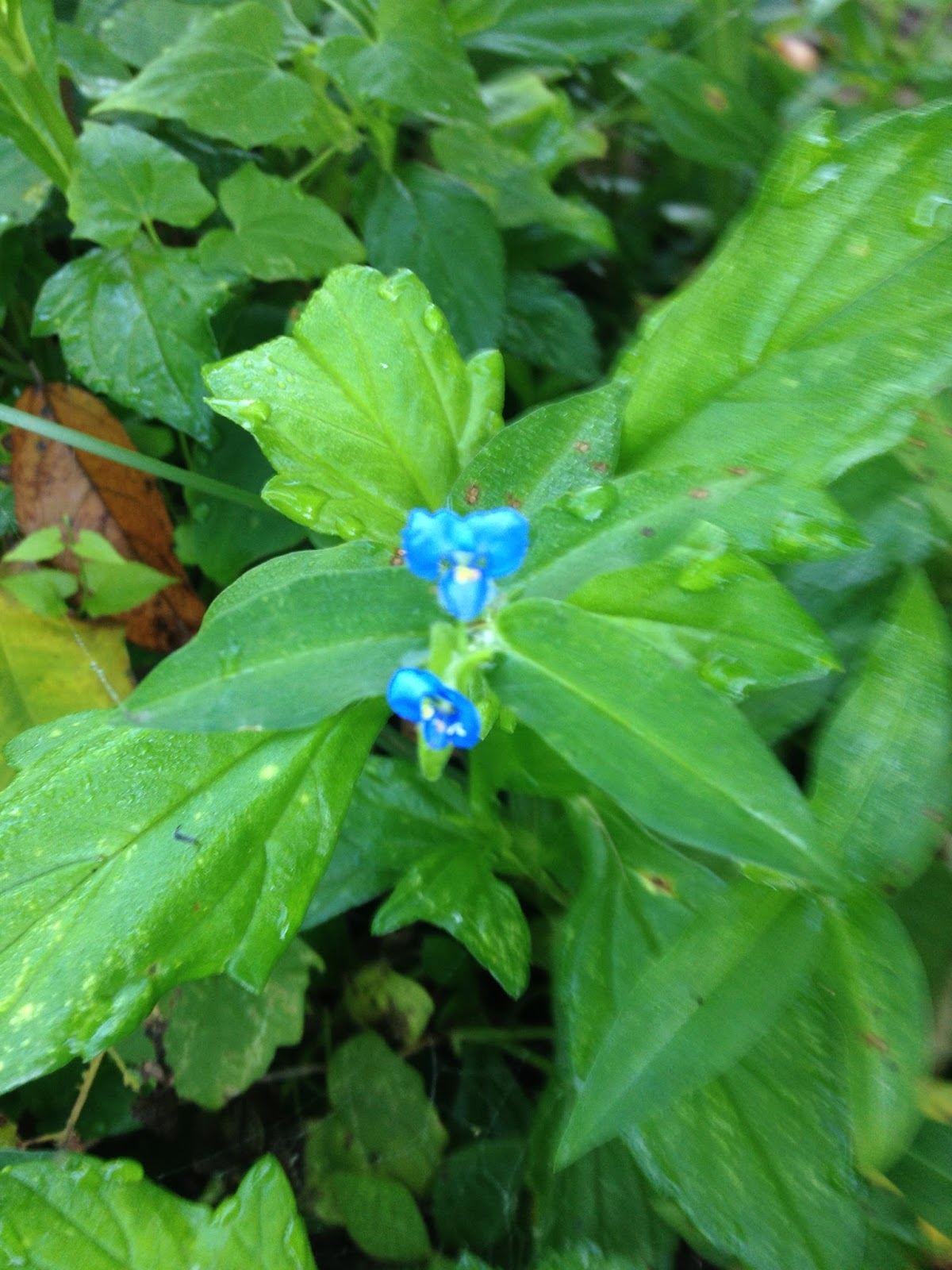
Finally, I thought I'd include some pictures of flowers I saw during my walk to school this morning (I took a different route to work by cutting down by the church, crossing the creek, and passing by the Health Center). I can't tell you much about them, but I know my mother loves flowers, so I'm including these for her.

Sunday, March 6, 2016

I'm no Michelangelo!

My biggest accomplishment this weekend was doing a little art work on the ceiling of my library. Recently, a ceiling fan was installed there, which will be a blessing once the really warm weather returns (it is warm yet still comfortable now, but I remember how hot it was when school started in September). I decided that this new ceiling fan looked like an airplane propeller. With a school that is over 80% boys, I thought it might be interesting for them if I were to create an airplane on the ceiling behind the fan blades.

I mentioned Black History Month in one of my February blog posts, so it is appropriate that I acknowledge that March is considered Women's History Month. An important phase of women's history in America is how a lot of women stepped up during World War II and took jobs previously performed by men, many of whom at that time were serving in the armed forces overseas. These “Rosie the Riveters” helped to set the stage for the future freedoms that my daughter and other young women now enjoy in America.

My own grandmother was one of these women who proudly took jobs on industrial assembly lines during the war. My father's family had moved to Akron, Ohio, during the war years, and my grandmother got a job working at the Goodyear Aviation plant. Goodyear was under contract to help the Vought Corporation build F4U Corsairs for the U.S. Navy. She was a “Rosie the Riveter” who worked on the area between the cockpit and the engine.

So it is only fitting that I should choose the iconic design of the Corsair to draw above the ceiling fan. It's uniquely designed “inverted gull” wings make it readily identifiable from other planes (this was done to allow for a larger diameter propeller). Another connection is that the term "Corsair" is means pirate or buccaneer--of which there were many in these Caribbean waters. That plane means a lot to me, and it was worth spending several hours of my day off drawing it on the ceiling. At the end, I laid down on the floor underneath the ceiling fan to take this picture.

It wasn't easy to draw, considering I had to work around the ceiling fan. I stood on a chair with four layers of old encyclopedias placed on the seat to give me a few more inches of height. I used a broken plastic ruler (about 9 inches long) and an unwieldy triangular meter stick. I had to guess at the angles and measurements, as I had no protractor or any other tools. I roughed it out in pencil, and then used a black marker to finalize my lines (I had intended to put some curvature on the gull wing angles, but started following my pencil lines and forgot all about it—oh well!).

Thus, it isn't perfect, and the purists will note that the main wing angles are too extreme, but it gets the point across to the students that this is an airplane screaming straight down from the sky, and that is all that matters to them. I think I will leave it as this simple black and white drawing, because painting on the ceiling is very challenging, what with worrying about dripping paint and other problems (Michelangelo made it look easy in the Sistine Chapel, but it isn't). Leaving it as it is makes it a bit like a blueprint, and might provide an opportunity for me to explain mechanical drawing to my students. [I will try to use some "White Out" to get rid of some of the extraneous pencil marks that were hard to erase off the ceiling.]

A few folks might question whether it was appropriate for a Peace Corps Volunteer to draw an American military airplane at his school. Well, I can justify it because of the history involved—not just my own personal family history with this plane, but also this famous plane's place in aviation design history. Plus, after the war, some Corsairs were converted to use as racing airplanes (one of the characters in the air racing Disney film “Planes” was a Corsair). I purposely left all the armaments off the plane so that it could be considered an air racer, just in case anyone might question it, but I can't imagine there is any problem with it. I just hope it provides something new for the imaginations of my students!